
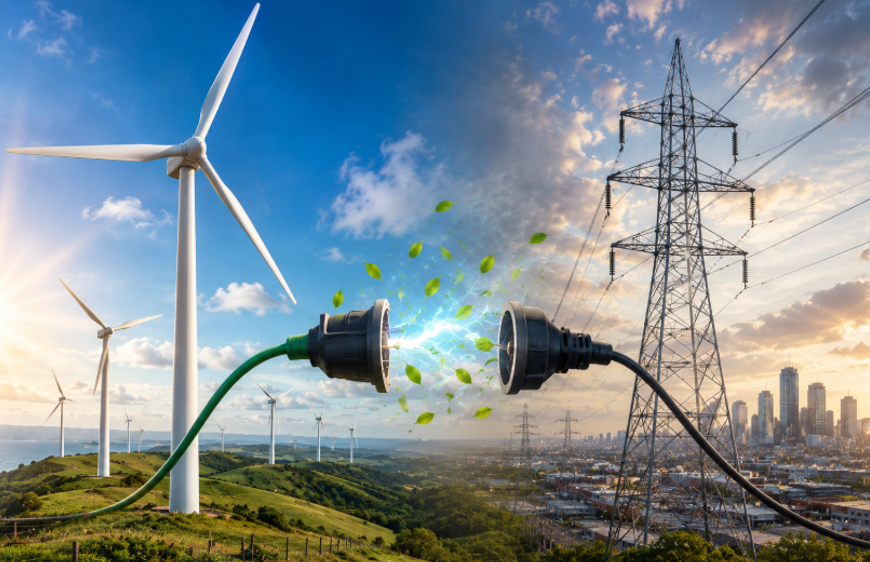
The UK has made great strides in developing its renewable energy technology over the past decade. Wind farms now generate a significant proportion of Britain’s electricity, helping to reduce carbon emissions and strengthening energy security. But despite this success there is a problem: we are increasingly generating clean electricity that our energy grid cannot fully use.
The Hidden Costs of Clean Energy
Wind is a huge resource for the UK – when it blows hard, we can generate vast amounts of power from it. But the power lines, especially those bringing power down from Scotland, can reach full capacity. To prevent the grid from overloading, wind farms are paid to switch their turbines off, and it’s no longer possible to transport the electricity to where it’s needed.
This process, known as wind curtailment and balancing, helps to maintain the stability of the grid. But it also means that renewable energy is being wasted, while massive costs are being incurred in balancing the network.
The issue is not that the UK has invested too heavily in renewable energy. It’s the fact that renewable generation has expanded at such a pace that the grid is struggling to cope with it. Many of the UK’s largest wind farms are in Scotland and around the coastlines, where wind resources are strongest, while the greatest demand for electricity in England comes from inland towns, cities and industrial centres. Without sufficient transmission capacity between the two, it’s not always possible for the clean electricity to reach the people and businesses that need it most.
Why Infrastructure Matters
The important point is that the UK’s energy transition is dependent on infrastructure, as well as renewables, and therefore building wind farms is only part of the solution. The transmission network, substations, battery storage and other supporting infrastructure all need to evolve just as quickly as our renewable energy technology. Otherwise the UK will struggle to make full use of the electricity it generates.
Delivering sufficient infrastructure will be a significant undertaking. New transmission routes require careful planning, land acquisition, stakeholder engagement, and in many cases, statutory consenting processes. Often, multiple landowners are involved, as well as local authorities, utility providers and communities, making effective collaboration essential to successful delivery.
What we can do at BTS
At BTS, we work on project we can do at BTS
At BTS, we work on projects that span across the infrastructure and energy sectors. We support our clients from the earliest stages of planning through to delivery. Whether this
is advising on land rights, utility infrastructure, stakeholder engagement, or property matters, we understand that successful projects don’t just rely on engineering: they require a coordinated approach that will balance technical, environmental and commercial considerations.
Looking Forward
As the UK continues to work towards its Net Zero targets, the focus is increasingly shifting from the generation of more renewable energy to ensuring that the infrastructure will exist to transport, store and distribute it efficiently. This will help to reduce constraints, improve resilience and ensure that the UK is able to use its clean energy where it will have the greatest benefit.