
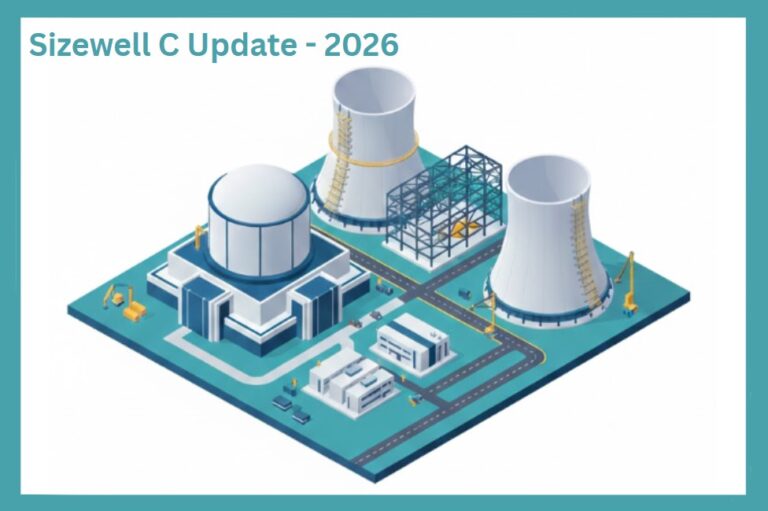
When we first covered Sizewell C back in early 2025, the focus was on projected start dates and the challenges of getting Britain’s next major nuclear power station off the ground. Fast forward to 2026 and things are now moving from planning to delivery in a very real way.
In the summer of 2025 the government confirmed the Final Investment Decision for Sizewell C, unlocking a multi-billion-pound programme that would see a 3.2 GW nuclear power station built on the Suffolk coast and delivering reliable low-carbon power for decades to come – enough for around six million homes.
Construction activity has ramped up considerably. Enabling works are now well underway, with thousands of people working on site, and the workforce is expected to grow significantly as the project progresses. Civil engineering efforts, such as installing sea defences and building key infrastructure like bridges and access routes, are visible milestones, and the project’s Works Tracker continues to update local communities with detailed progress and planned works.
The project has also begun to attract specialist suppliers and contractors, with recent announcements around major IT and communications infrastructure contracts that will support safety, resilience and long-term operation of the site.
For developers and specialists who are active in infrastructure, Sizewell C is a reminder both of the magnitude of the nation’s clean energy challenge and the opportunities that come with it. Nuclear projects of this scale have long lead times and complex delivery pathways, and understanding those dynamics early enough can make all the difference when planning long term schemes that will need to intersect with energy networks and community infrastructure.
As Sizewell C continues to take shape, it remains one of the most important components of the UK’s clean power transition, illustrating how largescale energy projects are now progressing from policy into reality.