
DCOs, Utilities, New Connections and Clean Power 2030 – find out more below…
What are DCOs?
DCOs (Development Consent Orders) are formal permissions granted for major projects (Nationally Significant Infrastructure (NSIPs) to be precise). The example everyone’s hearing about in the news at the moment is National Grid’s DCO Application for a new 400kV overhead electricity line, which will run for 180km from Norwich to Tilbury.
At BTS, we’re already acting on behalf of landowners and occupiers on several schemes that will be affected by the new apparatus. If your land will be impacted, the window for registering your interest opened on 2 October and will remain open until 27 November 2025. Not long to go so contact us for advice.
Want to find out what’s lurking below your site: A PAS 128 Survey might be your answer

PAS 128 Surveys are specifications for underground utility detection, verification and location in the UK.
Developers, contractors, engineers, utility providers and public authorities all use them and they range in accuracy starting from:
Type D: Desktop utility records searches
Type C: Visual inspections on site
Type B: Geophysical surveys (e.g. Ground Penetrating Radar)
Type A: Physical Excavation
PAS 128 surveys are essential to avoid the risk of striking underground utilities during development works.
New Connections – Important things to remember:
Your plans for applying for new utility connections on your development site may come unstuck if you:
- consider new connections too late in the planning process
- Ignore regulatory and technical changes
- fail to consider third party legal requirements ahead of timE
Make sure you:
- plan early
- engage specialists – don’t underestimate how complicated the process can be
- conduct thorough searches.
Clean Power 2030 Action Plan
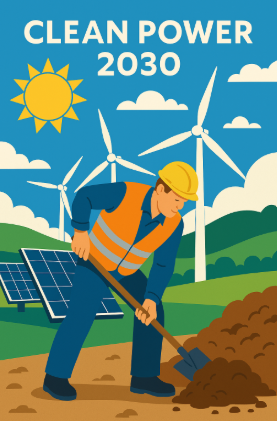
Wondering where we are in terms of clean power 2030?
According to NESO (National Energy System Operator):
- In 2024, we succeeded in running the electricity system at 95% zero carbonfor a short time.
- In May 2025, wind was our largest source power (providing 27%) but between April 2024 and March 2025our annual carbon intensity reduced but was still well above the CP30 target.
- NESO maintain that they are committed to meeting the CP30 target and will continue to work with stakeholders to achieve this.
You can read more about NESO’s work on the Clean Power Action Plan below
Clean Power 2030 | National Energy System Operator
Let BTS help you navigate the complexities of infrastructure and unlock the full potential of your development. Contact us today for a no-obligation consultation.